Traditional Branding vs Personal Branding vs Founder Led Branding. What’s Changed, and Why It Matters Now
There was a time when branding could be polished, professional, and a little bit removed from the person behind the business, and that was completely fine.
A strong visual identity, a solid website, decent packaging, and a brand voice that sounded credible enough could do most of the heavy lifting. The business could look established without the founder needing to be especially visible, and in a lot of industries that was exactly how things were meant to work.
That’s not really the market we’re in anymore.
That’s also a big part of why I created Red Bow House. I kept seeing women build brilliant businesses under branding that no longer matched the way the market was actually choosing.
Now, even when people are technically buying a service, a product, or a programme, they’re often paying attention to the person behind it at the same time. They’re noticing the founder’s taste, judgement, standards, way of speaking, point of view, and overall presence. Trust has become much more personal, and Edelman’s 2025 special report on brands found that 80% of people trust the brands they use, with trust now sitting alongside price and quality as a purchase consideration.
That shift is the reason this conversation matters so much now, especially for women in business. A lot of women are not simply selling a product or delivering a service. They’re also selling discernment, expertise, curation, standards, and the particular way they see things. That doesn’t mean every business needs to become personality-led in the loudest possible sense. It does mean the founder is often already part of how the business is being judged, whether she has built for that intentionally or not.
So in this article, I want to unpack the shift properly. Not just what personal branding and founder led branding mean, but how they differ from traditional branding, what we’re seeing change in the market, and why I think this matters so much for women building modern businesses.
Personal branding vs founder led branding: what’s the difference?
Why is traditional branding no longer enough for many businesses?
Did personal branding and founder led branding start on Instagram?
What did these brands look like before we had the language for them?
Why do personal branding and founder led branding matter more now?
Do you need to be online all the time to build a personal brand or a founder led brand?
What is traditional branding?
Traditional branding is business first.

It’s about building a recognisable identity for the company itself so the brand can stand on its own. In this model, the founder may matter internally, but she doesn’t necessarily need to be a visible part of the public-facing brand for the business to be understood or trusted. The focus tends to be on consistency, positioning, professionalism, and a visual and verbal system that gives the company its own separate identity.
There’s absolutely nothing wrong with that. In fact, for many businesses it still makes sense. But traditional branding was shaped in a market that trusted institutions more, had fewer businesses competing for attention, and didn’t expect the same level of access to the people behind the brand. It belonged to a time when distance could still read as credibility.
That’s why traditional branding isn’t dead, but it is under more pressure now. In a market where more businesses can look polished, polish alone has less power than it used to.
What is personal branding?
Personal branding is about the woman herself.
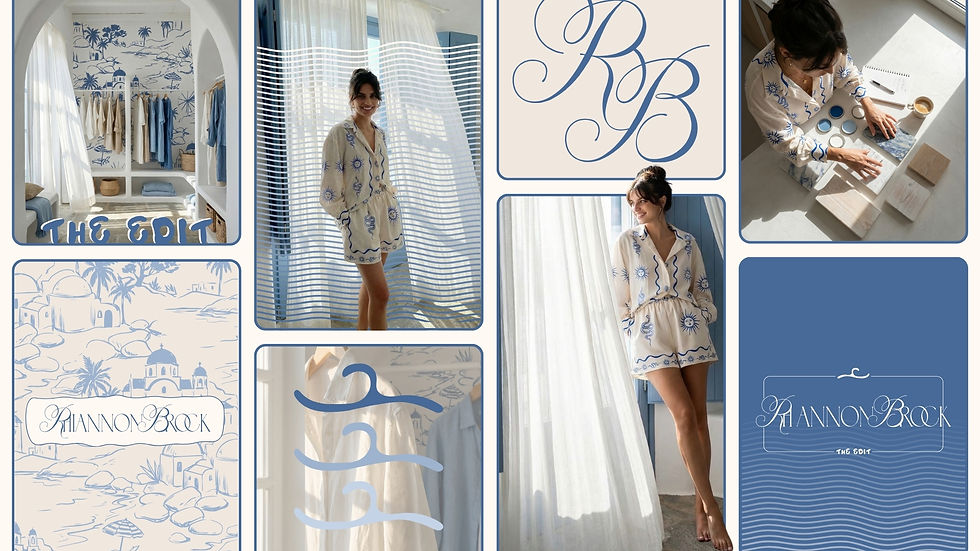
It’s the reputation layer that forms around a person and their work. It includes how they’re perceived, what they’re known for, what people associate with them, and the feeling they leave behind. It covers their voice, their visual world, their ideas, their opinions, their tone, their expertise, and the way they consistently show up.
A personal brand can exist with or without a business attached to it. Writers have personal brands. Consultants have personal brands. Coaches, speakers, creators, founders, and industry experts all have personal brands too, whether they’ve shaped them deliberately or not.
That’s why personal branding isn’t just about being visible. It’s about being legible. It helps people understand who you are, what you stand for, and why your perspective carries weight.
What is founder led branding?
Founder led branding sits in a slightly different place.

It’s where the founder’s standards, perspective, credibility, and point of view are intentionally woven into the way the business itself is understood. Instead of the founder sitting off to the side while the company does all the talking, she becomes part of the reason the business feels coherent, credible, and worth paying attention to.
That doesn’t mean the brand turns into a vanity project, and it doesn’t mean the founder has to become an influencer. It simply means that the founder is no longer irrelevant to the brand story. Her way of thinking helps shape how the business is read.
This is the distinction that matters most. Personal branding builds recognition around the woman. Founder led branding uses that human layer to strengthen the business.
Personal branding vs founder led branding: what’s the difference?
This is where a lot of people get fuzzy, because the two obviously overlap.
Personal branding is about the individual. It’s about how the woman is seen, remembered, talked about, and trusted in relation to her work.
Founder led branding is about the company. It’s about how the business becomes more distinct, more attributable, and more trusted because it is clearly shaped by that founder’s standards and perspective.
So personal branding builds the woman’s reputation, while founder led branding builds a business that carries more meaning because it is anchored in that woman.
Sometimes you need one more than the other. Sometimes you need both working together. But they’re not the same thing, and I think getting that distinction right makes the whole conversation much more useful.
Why is traditional branding no longer enough for many businesses?
Because the market has changed in too many ways at once.
There are more businesses being created, more content being published, more founders showing up publicly, and far more polished looking brands than there used to be. The U.S. Census Bureau reported 496,443 business applications in February 2026 alone, and the GEM 2024 to 2025 Women’s Entrepreneurship Report found that one in ten women started new businesses in 2024, with women’s startup rates rising in 19 of the 47 countries tracked year over year.
At the same time, the creator economy is no longer some side conversation happening at the edge of marketing. Ogilvy’s 2026 Influence Trends report describes it as a foundational pillar of modern marketing. That wording matters because it tells you this shift is structural, not just cultural. Money, attention, and trust are moving towards people, not just companies.
Then you add AI to the picture. It’s now easier than ever to produce content that looks finished. But that doesn’t mean it feels owned, memorable, or believable. As more businesses use similar tools, similar formats, and similar language, the differentiator becomes less about who can look polished and more about who feels unmistakably real.
That’s why so many brands now need more than traditional branding. They need a human centre of gravity.
Did personal branding and founder led branding start on Instagram?
No. Instagram just made them harder to ignore.
Women have been building founder-shaped brands for decades, long before we had neat language for it. Estée Lauder is an obvious example. Britannica notes that she described some of her core strategies as personally opening new Estée Lauder counters herself, offering free promotional items, and remaining personally involved in the company. That wasn’t called founder led branding at the time, but that is clearly what was happening. The founder’s presence and way of doing business were part of the brand’s power.

The same applies to women like Martha Stewart, Oprah, and Mary Kay. Their businesses were never just collections of products or services. They were worlds built around standards, taste, authority, and a recognisable personal lens. What made those brands powerful was not only what they sold, but the fact that the founder represented a distinct way of thinking and living.
So no, this didn’t start with social media. What social media did was speed everything up. It shortened the distance between founder and audience, made visibility easier to scale, and turned a founder’s perspective into something that could influence demand in real time.
What did these brands look like before we had the language for them?
They usually looked like businesses where the founder’s name, taste, or philosophy had quietly become shorthand for the brand itself.
That’s the part I think people sometimes miss. Before we had terms like personal branding and founder led branding, women were still building companies where the founder meant something beyond ownership. She represented a standard. A taste level. A way of doing things. A worldview.
That older version often unfolded through television, publishing, retail, word of mouth, or long term cultural presence. The modern version happens faster and in more visible ways, but the underlying pattern is not new. People have always been drawn to brands that feel anchored in someone real.
What do modern founder led brands look like now?
The modern version is more immediate, more public, and much more layered.
Glossier is one of the clearest examples because Emily Weiss built trust and cultural proximity through Into The Gloss before Glossier ever launched. Wired reported that the company already had more than 15,000 Instagram followers before it released a single product. That’s important because it shows the business did not start with product first and founder second. It started with worldview, trust, and audience, and the brand grew from there.
Jones Road is another example, but in a quieter and more mature way. The brand’s own site says it was founded by Bobbi Brown on the belief that the world doesn’t need more beauty products, it needs better beauty products, and describes the company as “a lifetime of beauty knowledge, distilled.” That line is doing a lot of work. It tells you the founder’s accumulated judgement is part of what makes the offer feel credible.

Then there’s rhode, which shows what happens when founder relevance, content, community, and commerce all reinforce each other. In 2025, e.l.f. Beauty announced a $1 billion deal to acquire the brand and said rhode had delivered $212 million in net sales in the previous twelve months. Whatever anyone thinks about celebrity founders, the commercial message is hard to ignore. Brands that know how to convert founder attention into a real system are being rewarded for it.
That’s also why smaller founder led brands matter so much right now. This isn’t just a celebrity story. A founder led brand does not have to be globally famous to be powerful. It simply has to feel attributable. It has to feel like there is a real mind behind it.
Are more brands becoming founder led?
There isn’t one perfect master statistic that tells us exactly what percentage of brands have become founder led, and I actually think pretending there is makes the conversation weaker.
The shift is better understood through a cluster of signals.
Trust has become a purchasing factor.
Marketing investment is moving more heavily into people-led channels.
More women are starting businesses in crowded markets.
And in B2B, where expertise is often the real product, thought leadership has become commercially significant in a very direct way. Edelman and LinkedIn found that 73% of B2B decision-makers see thought leadership as a more trustworthy basis for assessing a company’s capabilities than marketing materials, and other Edelman reporting shows that 60% of global B2B decision-makers and C-suite leaders say they’re willing to pay a premium for organisations that provide valuable thought leadership.
To me, that is the real evidence. Even when the language varies, more businesses are clearly relying on founders, experts, and visible points of view to build trust, demand, and distinction.
Why do personal branding and founder led branding matter more now?
Because being good at what you do is no longer enough if the market can’t read that goodness properly.
A lot of women are already selling more than a simple offer. They are selling judgement, curation, standards, taste, clarity, and expertise. But if the brand doesn’t make that visible, the value often lands flatter than it should.
That is where personal branding and founder led branding become commercially useful.
Personal branding makes the woman easier to recognise and trust. Founder led branding makes the business easier to understand and value because that trust has somewhere concrete to land.
That can affect authority. It can affect memorability. And yes, it can affect pricing. Not because you can wave a wand and suddenly charge more, but because people find it easier to pay premium prices when the brand feels clearer, more specific, and harder to replace.
Why I launched Red Bow House in response to this shift
This shift is also a big part of why I launched Red Bow House.

Through ReWorded, I’d already been seeing the same pattern over and over again. More women were building businesses where the founder was clearly part of the value, whether that showed up through expertise, taste, leadership, recommendations, or simply the way they were known in their space. But their branding often hadn’t caught up to that reality yet.
The work was strong. The offers were strong. The thinking was strong. But the brand still felt too generic, too disconnected, or too visually polite to carry the real weight of the business behind it.
That’s what made the shift feel impossible to ignore.
I didn’t open Red Bow House because founder led branding suddenly sounded trendy. I opened it because the market had clearly changed, and I wanted a more focused space to respond to that change properly. ReWorded gave me the wider strategy led foundation, but Red Bow House gave me a sharper lens for women whose businesses are closely tied to who they are.
To me, that’s where a lot of branding is heading now. Not towards louder brands for the sake of it, and not towards founders performing themselves online all day, but towards brands that feel more attributable, more human, and more aligned with the real source of their value.
Red Bow House was built for that exact kind of business. The kind where the founder is already shaping trust, already influencing perception, and already acting as part of the reason the brand is chosen. My role is to make sure the branding reflects that with more clarity, more distinctiveness, and more commercial weight.
Why does this matter so much for women in business?
Because a lot of women are still building excellent businesses under brands that don’t fully reflect the level they’re operating at.
The offer is strong, but the brand feels vague. The visuals are nice, but they could belong to almost anyone. The work is thoughtful, but the founder’s real standard, intelligence, and edge are not coming through strongly enough to shape perception.
That creates a gap between actual value and perceived value, and that gap is expensive.
I think this is exactly why personal branding and founder led branding matter so much right now. They help close that gap. They help a business feel more attributable, more specific, and more memorable. They help the right people understand not just what the business does, but why this business, led by this woman, feels worth paying attention to.
That is especially important in saturated categories where a lot of brands already look polished. What people remember is not simply polish. They remember something that feels recognisable.
Do you need to be online all the time to build a personal brand or a founder led brand?
No, and I think this is one of the biggest misconceptions around the whole subject.
You do not need to become a full time content machine. You do not need to share your private life constantly. You do not need to turn yourself into a performance of confidence just because the internet rewards volume.
What you do need is intentional visibility.
For some women, that looks like writing. For others, it looks like being interviewed, speaking on podcasts, showing up in editorial imagery, sharing more thoughtful opinions, or simply making sure the business feels clearly shaped by their perspective. Some founders will be front facing. Others will be more selective. Some personal brands will feel direct and vocal. Others will feel elegant, restrained, and unmistakable.
The point is not to be everywhere. The point is to be clear enough that the right people can feel there is a real person behind the business.
What does the future of branding look like now?
I don’t think the future belongs to brands that are simply more visible. I think it belongs to brands that are more attributable.
That means businesses that feel human without feeling messy, personal without feeling performative, and strategic without becoming cold. It means founders who understand how to turn their perspective into something more durable than content. Something people can recognise across the website, the words, the visuals, the interviews, the offers, and the overall feeling of the brand.
That’s the part of this shift I find most interesting.
Traditional branding hasn’t disappeared. It just isn’t the whole answer for many women in business anymore.
Personal branding helps people understand the woman. Founder led branding helps people understand why the business carries more weight because of her. And in a market where trust, clarity, and distinctiveness matter this much, that difference is not minor. It’s one of the most commercially important branding shifts we’re seeing right now.



Comments